AI Empowers Human Capabilities
Human-AI Collaboration Case Studies
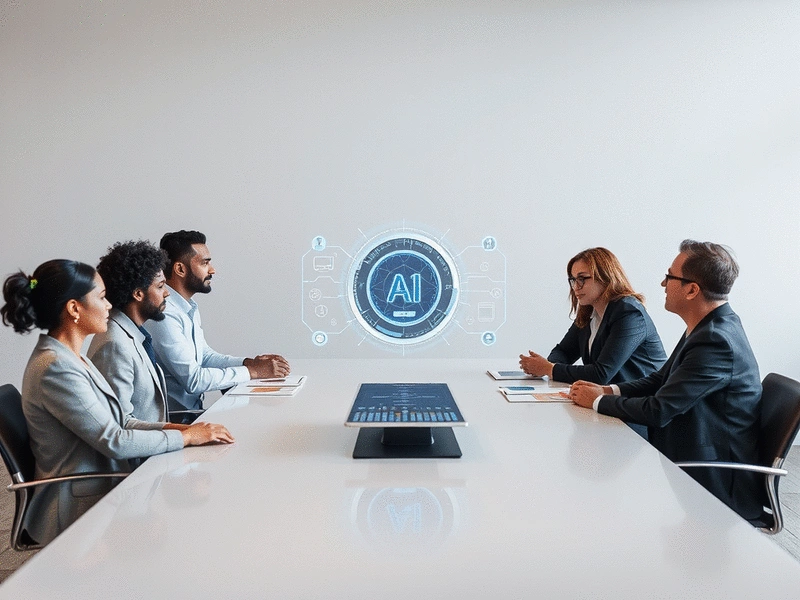
Have you ever considered how artificial intelligence could amplify your team's capabilities instead of replacing them? In today's fast-paced business landscape, understanding the synergy between human insight and AI is crucial for driving innovation and success.
What You Will Learn
- Human-AI collaboration enhances operational efficiency by combining the strengths of both parties.
- AI empowers decision-making through quick data analysis and predictive insights, leading to better outcomes.
- Real-world applications across sectors such as healthcare and finance demonstrate significant performance improvements.
- Investing in AI solutions yields a solid return on investment and positions businesses at the forefront of innovation.
Human-AI Collaboration: Augmentation vs. Replacement and Sector Integration
This visual summarizes key aspects of human-AI collaboration, highlighting the principle of augmentation over replacement and illustrating AI's integration across various sectors.
Core Principle Augmentation Over Replacement
Automates Tasks, Saves Time
Provides Data-Driven Insights
Real-World Application AI Integration Across Sectors
Healthcare: Diagnostics & Treatment
Finance: Risk & Fraud Detection
Retail: Inventory & Personalization
Understanding Human-AI Collaboration in Today’s Enterprises
As we navigate the evolving landscape of technology, the concept of human-AI collaboration emerges as a pivotal force in modern enterprises. This partnership isn't merely about machines replacing humans; it's about augmenting our capabilities. At Positive About AI, we believe in showcasing how these partnerships can lead to innovative solutions that drive success across various sectors.
Embracing AI doesn't mean relinquishing control; instead, it means leveraging technology to enhance our decision-making processes and operational efficiencies. This symbiotic relationship allows businesses to harness the strengths of both human insight and AI's computational power.

What is Human-AI Collaboration?
To fully grasp the potential of human-AI collaboration, we first need to define what this partnership truly entails. It goes beyond simple task automation; it's about creating systems where humans and AI work together, each complementing the other's strengths.
Defining the AI-Human Partnership
The AI-human partnership can be seen as a continuum where both entities contribute uniquely to the overall goal. Humans bring creativity, emotional intelligence, and contextual understanding, while AI provides data-driven insights and rapid processing capabilities. This integration allows teams to focus on strategic initiatives rather than mundane tasks. A deeper understanding of this dynamic can be found in research exploring how humans and AI work best together, illustrating the importance of this synergistic approach.
The Importance of Augmentation Over Replacement
- Empowerment: AI is designed to augment human capabilities, not replace them.
- Efficiency: By automating repetitive tasks, AI frees up valuable time for human workers.
- Enhanced Insight: AI analyzes vast data sets quickly, providing insights that inform better decision-making.
Focusing on augmentation means viewing AI as a tool that empowers employees, helping them to achieve more while fostering a workplace culture grounded in collaboration and innovation! This approach emphasizes that when humans and AI work best together, both individual and organizational performance can be significantly improved.
The Role of AI in Enhancing Decision-Making
In today's data-driven world, effective decision-making is crucial for business success. AI plays a significant role in improving these processes, offering insights that can shape strategic directions.
AI Integration Across Various Sectors
- Healthcare: AI assists in diagnostics and treatment plans.
- Finance: Risk assessment and fraud detection are streamlined with AI algorithms.
- Retail: AI helps in inventory management and customer personalization.
These examples showcase how AI integration is revolutionizing sectors by enhancing operational efficiencies and delivering tailored experiences to customers.
Benefits of AI-Enhanced Decision-Making
- Speed: Faster data analysis leads to quicker decisions.
- Accuracy: AI reduces human error, improving overall outcomes.
- Predictive Insights: AI models can forecast trends, assisting in strategic planning.
By embracing AI-enhanced decision-making, organizations can stay ahead of the curve, adapting to changing market dynamics with agility and precision!
Utilizing Decision Support Systems for Improved Outcomes
Decision Support Systems (DSS) powered by AI offer a structured approach to problem-solving and decision-making. These systems provide valuable data and analytics, allowing businesses to make informed choices quickly.
As a passionate advocate for the ethical use of AI, I believe that integrating DSS in organizations not only enhances productivity but also fosters a culture of continuous improvement. By utilizing these tools, we can empower teams to make decisions that align with the company's vision and mission.
Pro Tip
To maximize the benefits of human-AI collaboration, consider implementing regular training sessions for your team. This not only helps employees become more comfortable with AI technologies but also encourages them to explore innovative ways to integrate AI into their workflows. The more familiar your workforce is with AI tools, the more effectively they can leverage these technologies to enhance productivity and decision-making.
Frequently Asked Questions (FAQs)
What is human-AI collaboration?
Human-AI collaboration is a partnership where humans and AI systems work together, each complementing the other's strengths. Humans contribute creativity, emotional intelligence, and contextual understanding, while AI offers data-driven insights and rapid processing capabilities.
Why is augmentation preferred over replacement in human-AI collaboration?
Augmentation means that AI enhances human capabilities rather than replacing them. This approach empowers employees, automates mundane tasks to save time, and provides data-driven insights, allowing humans to focus on higher-value activities and strategic initiatives.
How does AI enhance decision-making in businesses?
AI enhances decision-making by providing faster data analysis, reducing human error for improved accuracy, and offering predictive insights to forecast trends. This allows organizations to make quicker, more informed, and strategic decisions.
Can AI be applied across different industries?
Yes, AI is integrated across various sectors. For example, in healthcare, it aids in diagnostics and treatment plans; in finance, it streamlines risk assessment and fraud detection; and in retail, it helps with inventory management and customer personalization.
What are the key benefits of human-AI collaboration?
The key benefits include enhanced operational efficiency, improved decision-making, better service delivery, increased customer satisfaction, significant performance improvements in real-world applications, and a promising return on investment (ROI).
How can businesses prepare their workforce for AI integration?
Businesses can prepare by assessing current technologies, engaging AI experts, fostering a culture of innovation, and investing in training programs to upskill employees in AI competencies. Prioritizing talent development ensures the workforce is confident in using new AI technologies.
Summarizing the Benefits of Human-AI Collaboration
As we've explored the various case studies, one thing is clear: the benefits of human-AI collaboration are profound and far-reaching. From the automotive industry to healthcare, AI is proving to be a powerful ally in enhancing productivity and innovation. Understanding these advantages is crucial for any enterprise looking to harness the potential of intelligent technology.
To summarize the key takeaways from the industry case studies, we can look at the following insights:
- AI enhances operational efficiency and decision-making.
- Collaboration leads to improved service delivery and customer satisfaction.
- Real-world applications of AI show significant performance improvements.
- Investments in AI yield a promising return on investment (ROI).

Key Takeaways from Industry Case Studies
Understanding the Value of AI in Different Sectors
Each sector we've examined has demonstrated unique ways in which AI adds value. For instance, in healthcare, AI tools like IBM Watson help enhance diagnostics, improving patient care. In logistics, DHL uses AI to optimize supply chain management, reducing costs and improving delivery times. Furthermore, recent scientific research highlights the potential of AI to improve decision-making in complex environments, reinforcing its value across diverse fields.
Recognizing the distinct applications of AI in various domains enables businesses to tailor their strategies according to sector-specific needs. This adaptability is essential for leveraging AI technologies effectively.
Realizing Performance Improvements and ROI
Performance metrics from these case studies reveal a consistent pattern: organizations investing in AI are seeing substantial increases in productivity and efficiency. The financial services sector, for instance, has reported significant time savings through the automation of mundane tasks, allowing employees to focus on higher-value activities.
Moreover, organizations can expect a measurable return on investment (ROI) as they integrate AI solutions. Such data can help in convincing stakeholders of the necessity for adopting intelligent technologies.
Preparing for the Future of Work with AI
As we look toward the future, it’s evident that enterprises must strategically plan for the integration of AI into their workflows. Embracing this technology not only prepares businesses for upcoming challenges but also positions them as leaders in innovation.
To prepare effectively, consider the following steps:
- Assess current technologies and identify areas for AI enhancement.
- Engage with AI experts to develop tailored solutions.
- Foster a culture of innovation, allowing team members to experiment with AI tools.
- Invest in training programs to upskill your workforce in AI competencies.
Encouraging a Culture of Innovation and Collaboration
A collaborative culture is key to successful AI adoption. By fostering an environment where innovation thrives, organizations can maximize the potential of AI. Encouragement from leadership can inspire employees to embrace change and actively participate in AI initiatives.
At Positive About AI, we believe that sharing knowledge and experiences can help bridge the gap between technology and human insight. This is essential for driving the message that AI is here to augment our capabilities, not replace them.
Leveraging Talent Development for Workforce Optimization
To fully harness the benefits of AI, businesses must also prioritize talent development. Upskilling employees in AI-related fields ensures that the workforce is prepared to engage with new technologies confidently. Offering training workshops, mentorship, and resources fosters an adaptable workforce eager to embrace these changes.
The future of work is undeniably intertwined with AI, and the proactive development of talent will be a cornerstone of successful integration.
Engaging with AI: Next Steps for Enterprises
Resources for Learning More About AI Adoption
As you consider how to engage with AI in your own enterprise, there are numerous resources available to guide you. I encourage you to explore various options including:
- Webinars that provide insights into the latest AI trends.
- Workshops tailored for hands-on experience with AI tools.
- AI consulting services to help develop a personalized adoption strategy.
These resources can significantly reduce the learning curve and provide valuable guidance as you embark on your AI journey.
Join the Conversation: Share Your Experiences
Finally, let's open the floor for discussion! I invite you to share your own experiences with AI integration. How has your organization approached the challenges and opportunities presented by this technology?
Your input can help shape a community of learning and collaboration around AI. At Positive About AI, we believe that every voice matters, and together we can build a more informed future!
Inviting Reader Contributions and Discussions on AI Integration
Engaging with others who are navigating AI adoption offers a chance to learn from real-world experiences and best practices. By sharing insights, we collectively advance our understanding and foster an environment of trust and optimism in intelligent technology.
Recap of Key Points
Here is a quick recap of the important points discussed in the article:
- Human-AI Collaboration: It's about augmenting human capabilities rather than replacing them.
- Efficiency Gains: AI can automate repetitive tasks, allowing humans to focus on more strategic initiatives.
- Enhanced Decision-Making: AI provides quick data analysis, improving accuracy and speed in decision-making processes.
- Sector-Specific Applications: AI integration is transforming industries like healthcare, finance, and retail by enhancing operational efficiencies.
- Cultural Embrace of AI: Fostering a culture of innovation and collaboration is essential for successful AI integration.
- Talent Development: Prioritizing upskilling employees in AI competencies is key to optimizing the workforce.

Elena R. Caldwell
Elena R. Caldwell is a passionate advocate for the ethical advancement of artificial intelligence. With a background in technology journalism and an extensive understanding of emerging AI trends, she is dedicated to showcasing the positive impact of AI across industries. Through her work at Positive About AI, Elena aims to foster a deeper understanding of intelligent technologies, ensuring they are perceived as transparent and empowering tools for the future.
Popular Posts
AI Governance for Business Growth
![How AI Governance Can Drive Competitive Advantage and Innovation]() In an era where technology evolves at breakneck speed, the role of AI governance is more critical th
In an era where technology evolves at breakneck speed, the role of AI governance is more critical th
 In an era where technology evolves at breakneck speed, the role of AI governance is more critical th
AI Technology: Trends and Innovations
![The future of AI technology: Emerging trends and innovations]() As we venture into a future increasingly shaped by artificial intelligence, it’s vital to understa
As we venture into a future increasingly shaped by artificial intelligence, it’s vital to understa
 As we venture into a future increasingly shaped by artificial intelligence, it’s vital to understa
AI in Marketing: Real Success Stories
![The Future of AI in Marketing: Success Stories of AI-Driven Campaigns]() In an age where technology evolves at an unprecedented pace, the integration of artificial intellige
In an age where technology evolves at an unprecedented pace, the integration of artificial intellige
 In an age where technology evolves at an unprecedented pace, the integration of artificial intellige
Implementing AI Responsibly in Business
![Practical Guide to Implementing AI Innovations Responsibly in Your Organization]() In a world where technology is rapidly evolving, the importance of ethical considerations in artific
In a world where technology is rapidly evolving, the importance of ethical considerations in artific
 In a world where technology is rapidly evolving, the importance of ethical considerations in artific
